 0800 121 122
 Login
Login

A tale of two decades
New Zealand shares have experienced both strong and challenging periods over the past decade and a half.
From around 2011 through to 2020, New Zealand was one of the stronger performing share markets in the developed world. Investors with meaningful allocations to local companies were well rewarded and portfolios with higher exposure to New Zealand shares compared favourably to more globally diversified portfolios.
More recently, that has changed. In the last few years, New Zealand has moved closer to the bottom of the developed market performance tables, while most offshore markets have surged ahead. The shift has been noticeable and, for some investors, uncomfortable.
That discomfort is understandable. It is natural to feel confident in an allocation when it’s performing well, and to question it when it’s not. But it’s also where perspective matters most. Both reactions are versions of the same instinct: judging long-term decisions through the lens of recent performance.
Why the strategic case remains strong
Despite recent underperformance, the case for maintaining a meaningful allocation to New Zealand shares remains intact for local investors.
The main reasons for this are:
- Tax efficiency New Zealand’s tax settings tend to favour domestic shareholdings relative to some offshore investments. For many investors, this means that a dollar of return from local companies may be more tax-efficient than the same return from certain overseas holdings. Over time, those differences in tax treatment can compound into material differences in after-tax outcomes.
- Currency alignment Investors planning to retire in New Zealand will have the bulk of their future spending needs in New Zealand dollars. Holding local shares helps align investment assets with these future spending needs, rather than relying on currency movements to work in your favour. It can also reduce the noise that exchange rate swings can introduce into portfolio valuations.
- Regulatory and geopolitical stability New Zealand is not immune to shocks, but it offers a relatively stable legal, regulatory and political environment. In a world where conflict and instability periodically dominate headlines, there is value in owning businesses based in a familiar jurisdiction supported by clear rules and investor protections.
These factors don’t guarantee that New Zealand will outperform in any period. What they do provide is a strong foundation for why local shares continue to play a role within a well-diversified portfolio.
Timing versus strategy in turbulent times
The recent performance of New Zealand’s share market highlights how difficult timing decisions really are.
When local shares were performing strongly, increasing exposure may have felt justified. As performance has softened, it’s just as easy to question that allocation and cut back or consider abandoning local shares altogether.
Both responses are examples of normal human nature. Unfortunately, both also rely on something that is almost impossible to do consistently; correctly identifying which markets will lead, and when that leadership will change.
The following chart highlights the return ranking of 22 developed share markets from 2026 (with the highest performing market each year at the top).
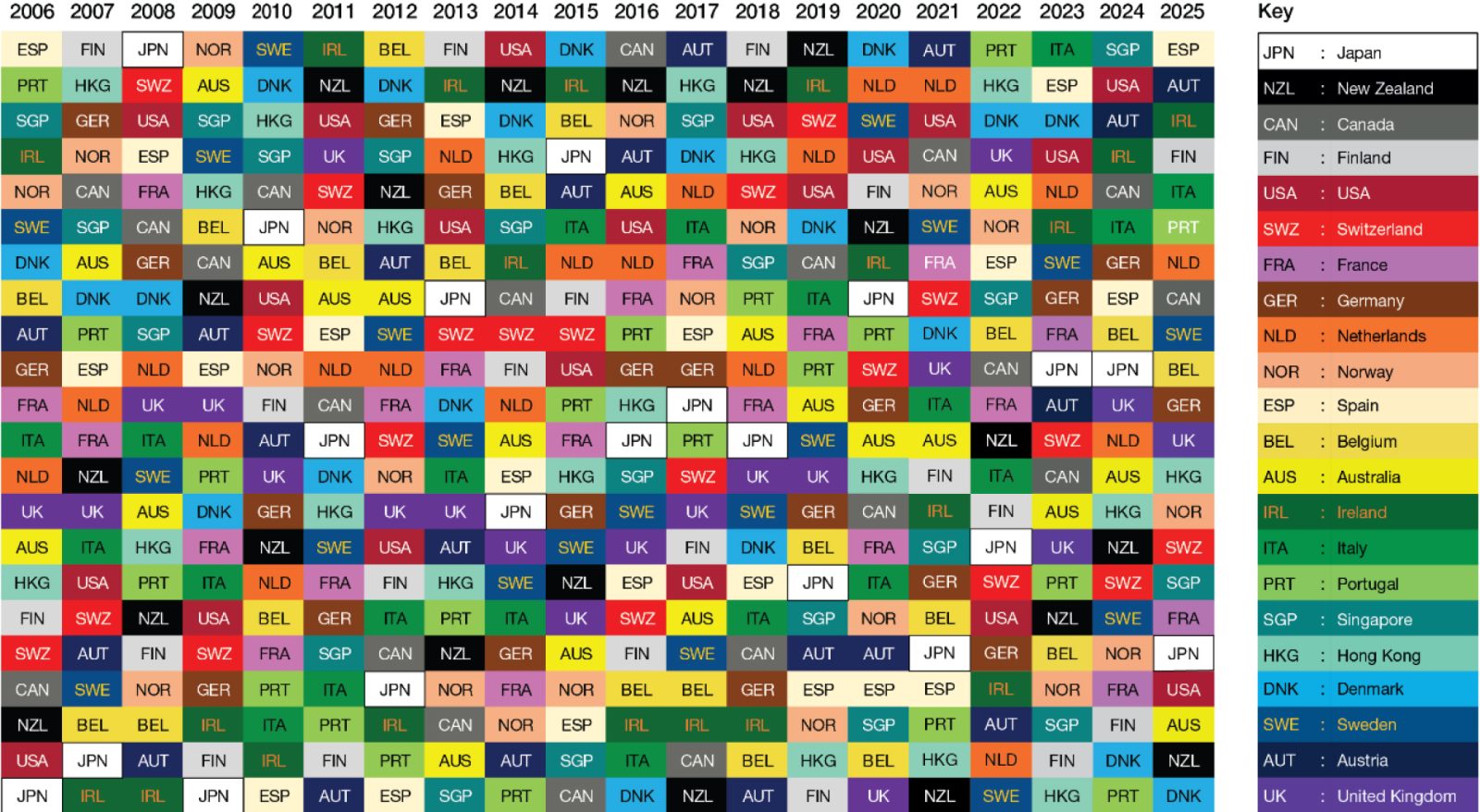
In NZ dollars. SOURCE: MSCI country indicies (net dividends) for each country listed. Does not include Israel, which MSCI classified as an emerging market prior to May 2010. MSCI data©2025 MSCI Inc. All rights reserved. Past performance is no guarantee of future results. Indicies are not available for direct investment; therefore performance does not reflect the expenses associated with the management of an actual portfolio.
The lack of a discernible pattern in these rankings should highlight the obvious challenge in identifying (ahead of time) when countries are likely to move up or down in the rankings. That’s the real issue from an active allocation perspective, because to make a successful market timing decision, you need to be right twice: when to move in, and when to move out.
The current global backdrop makes this even trickier. Geopolitical tensions in regions such as the Middle East and Eastern Europe, ongoing uncertainty around trade and security arrangements, and rapid changes in interest rate expectations all influence markets in ways that are difficult to predict. Prices adjust quickly as new information comes in, often before investors have time to react.
A strategic asset allocation approach provides more stable footing. It accepts that markets move in cycles, sets a long-term allocation based on an investor’s goals and risk profile and rebalances when markets move rather than chasing recent performance.
Through this lens, New Zealand’s performance moving from ‘leader’ to ‘laggard’ is not a signal to abandon local shares. It’s a reminder that relative performance can turn around relatively quickly, and why reacting to short-term movements can risk undermining long-term outcomes.
Looking forward
So where does this leave New Zealand investors today?
Recent local share market underperformance does not change the role local shares can play in a well-constructed portfolio. For investors whose lives and spending are centred in New Zealand, they continue to offer tax-efficient, currency-aligned exposure to businesses they know.
At the same time, strong performance in global markets highlights the importance of diversification. Different markets lead at different times and a well-balanced portfolio is designed to benefit from that rotation without needing to predict it.
The real value lies in having a clear framework and sticking to it through both the comfortable and uncomfortable periods.
 Get In Touch